
A disagreement about dishes should not leave you questioning whether your partner respects you. A tense meeting should not make you replay every word you said for hours. Yet these are often the quiet signs of unhealthy communication patterns: conversations that repeatedly create fear, confusion, resentment, or distance instead of understanding.
Unhealthy communication is not defined by whether conflict happens. Strong relationships, families, friendships, and workplaces all have difficult moments. The difference is what happens when tension arrives. Can both people speak honestly, listen with care, repair harm, and move forward? Or does every hard conversation become a familiar cycle of shutting down, blaming, appeasing, or exploding?
9 Signs of Unhealthy Communication Patterns
1. You avoid necessary conversations
You may tell yourself that bringing up the issue will only make things worse, so you stay quiet. You do not ask for help at work, tell your sibling that a comment hurt, or explain to your partner what you need. On the surface, this can look peaceful. Underneath, it often creates emotional distance.
Avoidance is usually a protective strategy. Perhaps past conversations ended in criticism, dismissal, or a blowup. But unspoken needs do not disappear. They tend to emerge later as irritability, withdrawal, passive comments, or resentment. Healthy communication does not require you to address every concern immediately. It does ask you to create a respectful time to address what matters.
2. Conversations turn into blame instead of curiosity
Listen for phrases like, “You always,” “You never,” or “This is all your fault.” Blame reduces a complex situation to a single villain, which may feel satisfying in the moment but rarely leads to a solution.
Curiosity creates a different opening: “Help me understand what happened,” or “When that changed at the last minute, I felt unsupported. What was going on for you?” This does not excuse harmful behavior. It gives both people enough emotional room to understand the facts, feelings, and needs underneath the conflict.
3. You feel pressured to defend yourself before you are heard
Defensiveness can show up as explaining, justifying, counterattacking, or rapidly listing the other person’s mistakes. Often, it comes from feeling accused. The problem is that once both people are focused on proving they are not wrong, no one is listening.
A healthier response begins with finding the piece you can acknowledge, even if you see the situation differently. “I understand why that landed as dismissive. That was not my intention, but I can see the impact.” Accountability is not surrender. It is a powerful way to lower the temperature and make a real conversation possible.
4. Silence is used as punishment
Taking a pause can be wise. Walking away to regulate your emotions, then returning at an agreed time, protects both people from saying things they regret. The silent treatment is different. It is withdrawal used to create anxiety, control the outcome, or make the other person chase reassurance.
If someone says, “I need 30 minutes to calm down, and I will come back at 7:00,” that is a boundary. If they disappear for days, refuse to acknowledge you, or withhold communication until you give in, the pattern is damaging. Emotional safety requires clarity, even when space is needed.
5. Your feelings are minimized or mocked
“You are too sensitive.” “You are overreacting.” “It was just a joke.” These statements may sound small, but repeated dismissal teaches people to distrust their own emotional experience. Over time, you may stop sharing what hurts because you expect to be ridiculed or told your feelings are unreasonable.
No one has to agree with every feeling to respect it. A caring response might be, “I did not realize that affected you that way. Tell me more.” In a professional setting, it may sound like, “I see this had an impact. Let’s talk through what happened.” Validation recognizes that someone’s internal experience is real. It does not mean every interpretation is automatically correct.
6. You communicate through indirect attacks
Sarcasm, eye-rolling, backhanded compliments, vague social media posts, and loaded jokes allow frustration to leak out without direct vulnerability. They can feel safer than saying, “I felt left out,” “I need more support,” or “I am frustrated by how this project was handled.” But indirect attacks invite confusion and retaliation.
This pattern is common when people fear rejection or do not believe direct communication will be received well. The shift is to name the issue plainly and respectfully. Directness may feel uncomfortable at first, especially if you are used to hinting. Still, clarity gives the other person something real to respond to.
7. The same argument repeats with no repair
Every couple may revisit a recurring topic. Every team may have ongoing differences around priorities, workload, or decision-making. The warning sign is not repetition alone. It is repetition without deeper understanding, changed behavior, or repair.
Perhaps you argue about money, but the deeper issue is safety and trust. Perhaps your manager says you need to be more proactive, while you are waiting for clearer expectations. Surface-level arguments repeat when the real need remains unnamed. Pause the usual script and ask: “What does this issue represent for each of us?” That question can move a stuck conversation from accusation to insight.
8. One person carries all the emotional labor
In an unhealthy dynamic, one person may always initiate the hard conversation, apologize first, remember important details, regulate everyone’s emotions, or work to restore peace after conflict. The other person may avoid, deflect, or wait to be pursued.
This imbalance is exhausting. Connection cannot be sustained by one person’s emotional effort alone. Mutuality does not mean both people do everything in identical ways. It means both people take responsibility for their impact and participate in repair. If you are always doing the work, it is reasonable to name that pattern and ask for a more shared approach.
9. You leave conversations feeling smaller
Not every difficult conversation feels good. Honest feedback, boundaries, and accountability can be uncomfortable. But a healthy exchange should not consistently leave you feeling ashamed, confused, afraid, or stripped of your voice.
Pay attention to your body after conversations. Do you feel grounded, even if the issue is unresolved? Or do you feel tense, foggy, and desperate to regain the other person’s approval? Your nervous system can offer useful information about whether communication is challenging but respectful, or repeatedly emotionally unsafe.
How to Change an Unhealthy Communication Cycle
A pattern changes when someone becomes willing to interrupt it. Start small and specific. Rather than raising five months of frustration at once, choose one recent moment and describe it without judgment: “When I was interrupted twice in the meeting, I stopped sharing my ideas. In the future, I need space to finish my thought.”
Then make room for the other person’s perspective without abandoning your own. Conscious communication holds two truths at once: your experience matters, and you may not yet know the full story. This is where emotional intelligence becomes practical. Regulate before reacting. Notice the story you are telling yourself. Speak from your feelings and needs rather than assumptions about intent.
It also helps to agree on rules for hard conversations. Choose a time when neither person is rushed or flooded. Stay with one topic. Avoid insults and character attacks. If either of you needs a break, commit to returning to the conversation. These practices are simple, but they create the structure that emotional safety needs.
There are times when communication tools alone are not enough. If a person uses threats, intimidation, repeated humiliation, coercion, or retaliation, prioritize safety and seek appropriate outside support. Healthy communication requires willingness from everyone involved. You cannot communicate someone else into respecting your boundaries.
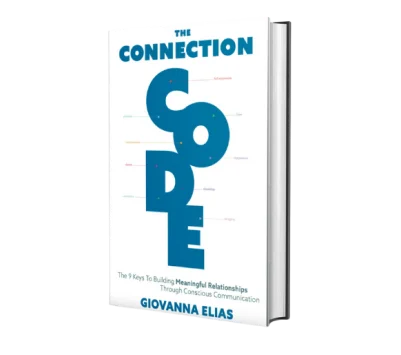
The Connection Code™ teaches that confident communication is not about having the perfect words. It is about becoming present enough to speak truth with compassion, listen without losing yourself, and repair what matters. Every time you replace avoidance with clarity or blame with curiosity, you create a new possibility for connection.
The next meaningful shift may begin with one honest sentence: “I want us to handle this differently.” Say it when you are ready, say it with steadiness, and let that choice become evidence that your voice belongs in the relationship.