
Your phone lights up: “Looking forward to tonight.” Instead of feeling excited, your mind starts scanning for danger. What will I say? What if there is no chemistry? What if they lose interest? What if I say the wrong thing?
If you want to reduce dating anxiety, the goal is not to become perfectly relaxed or effortlessly charming. The goal is to stay connected to yourself while meeting someone new. Anxiety often grows when a date feels like a verdict on your worth. It softens when you remember that a date is simply a conversation between two people discovering whether there is mutual alignment.
That shift sounds simple, but it changes everything: how you prepare, how you listen, how you speak, and how you interpret the moments that do not go exactly as planned.
Why Dating Can Feel So High-Stakes
Dating asks you to be visible before you have certainty. You may be sharing your hopes, your personality, your body language, and your time with someone who may or may not choose to continue. For people who have experienced rejection, betrayal, criticism, or emotionally unpredictable relationships, that uncertainty can activate a powerful protective response.
Your nervous system may treat a first date like a threat, even when your logical mind knows you are meeting someone for coffee. You might overthink every text, rehearse your stories, talk too quickly, become unusually quiet, or cancel at the last minute. None of these responses mean you are incapable of connection. They often mean that a part of you is trying very hard to prevent disappointment.
There is also a cultural pressure to perform. Many people enter dating believing they must be fascinating, desirable, funny, emotionally healed, and easygoing all at once. That is exhausting. Meaningful connection does not require a flawless performance. It requires presence, discernment, and the courage to communicate honestly.
Reduce Dating Anxiety by Changing the Question
Anxious dating is often fueled by one question: “Will they like me?” While understandable, that question puts all the power outside of you. It turns the other person into an evaluator and places you in the position of auditioning for approval.
Try replacing it with: “How do I feel when I am with this person?” Then add, “Do our values, energy, communication, and intentions seem compatible?”
This is not about becoming guarded or overly critical. It is about participating in the decision. You are not there to convince someone to choose you. You are there to learn whether the connection has the ingredients to grow.
Before a date, write down three qualities that matter to you in a relationship. Perhaps you value kindness, emotional availability, curiosity, consistency, or a shared vision for family. Keep those qualities in mind. They give your attention somewhere healthier to go than monitoring whether you appear impressive enough.
Regulate Your Body Before You Try to Fix Your Thoughts
When your body is in fight, flight, freeze, or fawn mode, positive affirmations can feel hollow. Start with your physiology. Give yourself enough time before the date so you are not rushing from work, traffic, or another stressful interaction directly into a vulnerable social moment.
Take a short walk, stretch, or place both feet on the floor and breathe slowly enough that your exhale is longer than your inhale. You might silently name five things you can see around you. This is not about eliminating every flutter of nervousness. A little anticipation can be a sign that something matters. The purpose is to signal safety to your body so you can choose your words rather than react from panic.
Be mindful of caffeine and alcohol, too. Caffeine can intensify a racing heart and make anxious thoughts feel more convincing. Alcohol may lower inhibition temporarily, but it can also disconnect you from your boundaries and make it harder to assess the interaction clearly. What supports you depends on your body and your history, but clarity is usually more valuable than trying to numb discomfort.
Prepare a Few Conversation Anchors, Not a Script
You do not need to walk into a date with a memorized list of impressive stories. In fact, over-rehearsing can make you feel more self-conscious when the conversation takes an unexpected turn. Instead, prepare a few genuine anchors: something you have been enjoying lately, a value that matters to you, a meaningful goal, or a question you are sincerely curious to ask.
Good conversation is less about having the perfect answer and more about creating room for mutual discovery. Rather than asking question after question as though you are conducting an interview, let your curiosity respond to what the other person shares.
If they mention a recent career change, you might say, “That sounds like a big decision. What helped you know it was time?” If they describe a favorite hobby, you could share what you notice: “I love how animated you become when you talk about that.” These responses build connection because they show attention, not because they are clever.
And if there is a pause, let there be a pause. Silence is not proof of incompatibility. Two people meeting for the first time are allowed to take a breath. You do not have to fill every empty space to prove you are interesting.
Let Authenticity Be More Valuable Than Approval
One of the fastest ways to increase anxiety is to shape-shift into whoever you think the other person wants. You may agree with opinions you do not share, minimize your needs, laugh when something does not feel good, or pretend to be more casual about your intentions than you really are.
This can create short-term comfort because it reduces the risk of disagreement. Over time, though, it creates a connection built around concealment. You may receive approval, but it will not feel safe because you are not sure the other person is responding to the real you.
Authentic communication can be gentle. You do not need to reveal your entire life story on a first date or turn every topic into a deep emotional conversation. But you can practice small acts of truth. Say that you are looking for a committed relationship if that is true. Mention that you enjoy quiet weekends if you do. State a preference without apologizing for it.
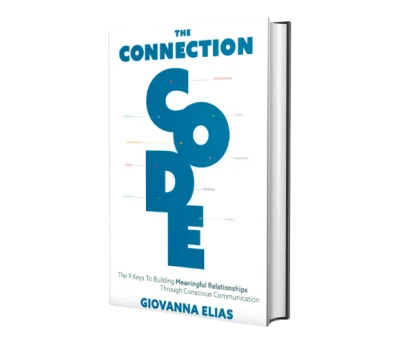
The Connection Code™ begins with the understanding that clarity and compassion belong together. You can be warm without abandoning yourself. You can be open without oversharing. You can express interest while still honoring your pace and boundaries.
Notice the Stories You Create After the Date
For many people, anxiety peaks after the date ends. You replay every moment and decide that a delayed text, a shorter reply, or a neutral expression must mean rejection. This is where emotional intelligence becomes essential: feelings are real, but they are not always accurate evidence.
When your mind begins predicting the worst, separate facts from interpretations. A fact might be: “They have not replied in four hours.” The interpretation might be: “They are no longer interested because I was awkward.” Those are very different statements.
Give yourself a compassionate alternative: “I do not have enough information yet.” Then return to your own life. Call a friend, finish a project, go to the gym, make dinner, or do something that reminds you that your identity is larger than one person’s response time.
If you want to send a follow-up message, do it from clarity rather than fear. A simple, direct note such as, “I enjoyed meeting you and would be open to seeing you again,” is confident and respectful. It expresses interest without demanding an immediate outcome.
Know When Anxiety Is Pointing to a Boundary
Not all discomfort needs to be breathed through. Sometimes anxiety is a signal that something is off. If someone pressures you, mocks your boundaries, speaks contemptuously about former partners, ignores your no, or creates confusion through inconsistent behavior, your nervous system may be responding to a genuine lack of safety.
The work is learning the difference between old fear and present information. Ask yourself: “Am I anxious because I am being seen, or because this person is behaving in a way that does not feel respectful?” You may not know immediately. Give yourself permission to slow down.
Healthy dating does not require you to override your instincts. It invites you to build enough inner trust that you can stay open while also recognizing when openness is not earned.
Practice a Kinder Definition of Success
A successful date is not necessarily one that leads to a second date, a relationship, or instant chemistry. Success can mean that you showed up, stayed present, communicated honestly, noticed how you felt, and honored your own standards.
Every date gives you practice in being more grounded in conversation. The same skills that help you speak with calm on a first date can transform a difficult workplace discussion, a family conflict, or a leadership moment where you need to be heard.
You do not need to earn connection by being perfect. Let each interaction be an opportunity to return to your voice, your values, and your capacity to meet another human being with genuine curiosity.