
A hard conversation rarely begins with the words you planned. It begins when your partner goes quiet after a sharp comment, when a colleague dismisses your idea in a meeting, or when your mother asks a question that lands like criticism. This nonviolent communication guide gives you a way to meet those moments with more clarity, self-respect, and compassion – without minimizing what hurts or avoiding the truth.
Nonviolent communication is not about sounding endlessly calm while your needs go unmet. It is a practice for saying what is real without attacking, shaming, blaming, or disappearing. When used well, it can transform repeated arguments into conversations where both people have a real chance to be heard.
What nonviolent communication really asks of you
Developed by psychologist Marshall Rosenberg, nonviolent communication, often called NVC, centers on a simple but demanding shift: move away from judgments about who someone is and toward honest language about what happened, how it affected you, and what you need now.
That shift matters because judgments tend to invite defense. “You are so selfish” may express genuine pain, but it gives the other person one obvious job: prove they are not selfish. The original issue gets lost. By contrast, “When our plans changed without a conversation, I felt disappointed because reliability matters to me” keeps the focus on the experience and the underlying need.
This does not make every conversation easy. Some people may still become defensive, deny your experience, or refuse to engage. Nonviolent communication cannot control another person’s maturity. What it can do is help you show up without abandoning your voice, escalating the situation, or later regretting the way you spoke.
The four steps in this nonviolent communication guide
The framework has four parts: observation, feeling, need, and request. They are not a script to recite mechanically. Think of them as a compass when emotion is high and your usual habits are pulling you toward accusation, shutdown, people-pleasing, or overexplaining.
1. Name the observation, not your interpretation
An observation is something a camera could record. “You arrived 25 minutes after our reservation” is an observation. “You do not respect my time” is an interpretation. Your interpretation may feel accurate, especially if this is a familiar pattern, but beginning with it often turns the conversation into a debate.
At work, compare “You ignored my email” with “I sent the proposal Tuesday and have not received a response yet.” In a marriage, compare “You never help” with “The dishes, laundry, and bedtime routine were left to me three nights this week.” Specific language gives the conversation somewhere solid to stand.
2. Identify the feeling beneath the reaction
Feelings are emotional experiences: hurt, anxious, frustrated, lonely, relieved, discouraged, hopeful, or overwhelmed. They are different from thoughts disguised as feelings. “I feel ignored” often means, “I am interpreting your behavior as ignoring me.” A clearer version might be, “I feel lonely and hurt.”
This distinction may seem small, but it creates more connection. People can argue with your conclusion. They cannot reasonably argue that you are having an emotional experience. Naming your feeling also helps you understand yourself before expecting someone else to understand you.
If you struggle to identify the feeling in the moment, pause. Notice your body. Is your chest tight? Is your jaw clenched? Are you speaking quickly because you feel anxious, or withdrawing because you feel discouraged? Emotional intelligence begins with that honest inner check-in.
3. Connect the feeling to a universal need
Under most conflicts is a need that matters: respect, consideration, autonomy, honesty, rest, partnership, safety, belonging, appreciation, fairness, or trust. Needs are not weaknesses. They are the human values that give your feelings meaning.
For example, beneath anger at a partner who keeps checking their phone may be a need for presence and connection. Beneath resentment toward a coworker may be a need for collaboration or recognition. Beneath anxiety before a difficult family dinner may be a need for emotional safety and acceptance.
When you speak from the need, your message becomes more human. “I need you to stop being rude” can become, “I want us to speak in a way where we both feel respected, even when we disagree.” The second statement does not excuse rude behavior. It makes the desired standard clear.
4. Make a clear, doable request
A request tells the other person what would help. It is specific, present-focused, and possible to answer. “Can we talk more?” is vague. “Could we spend 20 minutes after dinner tonight talking without our phones?” gives both people something concrete to consider.
A request is not a demand disguised with polite wording. The difference is your response to “no.” If the other person declines, a request invites more conversation: What is getting in the way? Is there another time or approach that could meet the need? A demand punishes, threatens, withdraws love, or treats refusal as proof of bad character.
You are still allowed to have boundaries. If a client repeatedly calls outside agreed hours, you might say, “I can respond to messages between 9 a.m. and 5 p.m. If something is urgent, please mark it clearly.” That is not controlling. It is a respectful statement of what you are available for.
What this sounds like in real life
The most useful communication tools are the ones you can use when your heart is racing. Here is a complete example: “When you joke about me in front of our friends, I feel embarrassed and tense. I need to feel respected in social settings. Would you be willing to tell me directly if something is bothering you instead?”
At work, you might say: “When my ideas are interrupted before I finish, I feel discouraged. I value being able to contribute fully. Could we make space for each person to finish their point before responding?” This is direct, professional, and far more effective than silently carrying resentment into the next meeting.
In family conflict, try: “When plans are made for the holiday without asking me, I feel left out. Being included matters to me. Can we discuss dates together before anything is confirmed?” Notice that none of these statements require you to pretend everything is fine. They simply make your truth easier to hear.
The common mistakes that keep conflict stuck
The first mistake is using the framework to sound superior. If your tone communicates, “I am emotionally evolved and you are the problem,” the words will not create safety. Nonviolent communication begins with humility, including the willingness to hear the other person’s needs too.
The second is skipping self-empathy. Sometimes you are too activated to have a productive conversation. Taking a walk, breathing slowly, writing down what happened, or asking for a pause can prevent an impulsive reaction. “I want to talk about this well, and I need 30 minutes to settle first” is often a powerful choice.
The third is believing compassion requires agreement. You can understand that your partner feels overwhelmed and still ask them to follow through. You can acknowledge a colleague’s pressure and still insist on respectful behavior. Compassion and boundaries belong together.
When nonviolent communication needs a stronger boundary
This approach works best when both people have basic willingness to engage. If someone is threatening you, manipulating you, repeatedly violating your boundaries, or using your vulnerability against you, prioritize safety over perfect wording. Keep your message brief, document what is needed, involve appropriate support, and create distance when necessary.
Not every relationship can be repaired through a better conversation. Yet the ability to express yourself clearly can help you recognize the difference between a relationship that needs new skills and one that needs firmer limits.
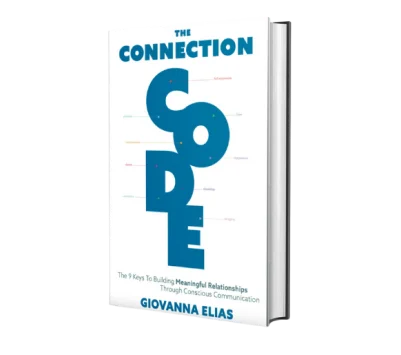
The Connection Code™ teaches this same larger truth: meaningful connection is not built by avoiding discomfort. It is built when you can stay connected to yourself while speaking with courage, compassion, and clarity.
The next time conflict rises, do not pressure yourself to say everything perfectly. Start with one honest observation, one real feeling, and one clear request. That small pause between reaction and response can become the place where a different relationship begins.