

The conversation you keep postponing rarely becomes easier on its own. The unsaid concern with your partner, the boundary your family member keeps crossing, the feedback you need to give a colleague – it often grows louder in your mind while your confidence gets smaller. Learning how to have difficult conversations is not about finding perfect words. It is about creating enough inner steadiness to speak honestly without abandoning compassion.
A difficult conversation can change the direction of a relationship, a team, or your sense of self-respect. Avoiding it may preserve temporary peace, but it can also create resentment, distance, confusion, and repeated conflict. Approaching it consciously gives both people a real chance to be heard and understood.
Why difficult conversations feel so personal
Most people do not avoid hard conversations because they lack intelligence or care. They avoid them because the nervous system reads conflict as risk. You may fear being rejected, judged, misunderstood, abandoned, punished, or seen as “too much.” At work, you may worry about damaging your reputation or creating tension with someone you must see every day.
That fear can show up in different ways. Some people become silent and agreeable, then resentful. Others over-explain, become defensive, or raise their voice because they feel unheard. Neither response makes you a bad communicator. They are protective patterns, often learned long before the current conversation began.
The goal is not to eliminate emotion. Emotion carries information. The goal is to recognize what is happening within you so it does not take over the room. When you can name your fear, your need, and your intention, you can respond rather than react.
How to have difficult conversations before emotions take over
A meaningful conversation begins before the first sentence. Take a few quiet minutes to get clear on what actually needs to be addressed. If you enter a discussion with a vague sense of hurt, you may reach for old evidence, criticize character, or turn one moment into a case against the other person.
Ask yourself: What happened? How did it affect me? What do I need now? What outcome would feel fair and realistic? These questions move you away from blame and toward clarity.
For example, instead of walking into a conversation with your partner thinking, “They never prioritize me,” identify the observable issue: “We made plans twice this month, and both times they changed at the last minute.” Then name the impact: “I felt unimportant and disappointed.” Finally, identify the request: “I need us to protect the time we agree to spend together, or tell each other earlier when plans need to change.”
This is not about scripting every word. Over-rehearsing can make you sound rigid or disconnected. It is about finding your center before the conversation asks you to stay present under pressure.
Choose the right moment, not the perfect moment
Timing matters. A serious issue is unlikely to go well when someone is rushing out the door, exhausted after a long day, drinking, or already in the middle of another argument. Ask for a time to talk rather than dropping a heavy subject without warning.
Try: “There is something important I would like us to talk through. Is tonight after dinner a good time, or would tomorrow be better?”
This invitation shows respect without making your needs optional. If someone repeatedly delays the conversation, be direct about that pattern. Respecting timing is healthy. Endless postponement is avoidance.
Start with truth, not accusation
The first few sentences shape the emotional temperature of the exchange. When people feel attacked, they tend to defend themselves. When they hear a clear, grounded truth, they are more likely to stay engaged.
A helpful structure is simple: name the situation, share your experience, and make a specific request. Keep your language anchored in what you observed rather than what you assume their motives were.
Compare these two openings:
“You clearly do not respect me. You always ignore my ideas in meetings.”
“In the last two team meetings, I was interrupted before I could finish my point. I felt dismissed, and I would like space to complete my thoughts before we move on.”
The second statement is still direct. It does not soften the issue into nothing. But it gives the other person something concrete to understand and respond to.
Use “I” statements with care. They are not a way to hide a sharp accusation behind polite phrasing, such as, “I feel that you are selfish.” Feelings are words like disappointed, anxious, hurt, overwhelmed, or frustrated. Naming them honestly creates connection. Labeling the other person creates resistance.
Stay curious when you feel triggered
A difficult conversation is not a speech. You deserve to express yourself, and the other person deserves an opportunity to share their perspective. Listening does not mean agreeing, excusing harmful behavior, or giving up your boundary. It means making room for information you may not yet have.
After sharing your experience, pause. Ask questions such as, “How did you experience that situation?” or “What was happening for you at the time?” Then listen for both the words and the feeling underneath them.
You may discover a misunderstanding, competing pressure, or a need that had not been voiced. That discovery can lead to repair. Other times, you may learn that the person is unwilling to take responsibility. That information matters too. Conscious communication is not only about restoring connection. It is also about seeing the relationship clearly.
If you feel yourself becoming flooded, slow down. Take one breath before responding. Feel your feet on the floor. Say, “I want to continue this conversation, and I need a few minutes to gather my thoughts so I can respond respectfully.” A pause is not failure. It is emotional intelligence in action.
Hold your boundary without becoming harsh
Many people confuse boundaries with ultimatums. A boundary is not an attempt to control another person’s choices. It is a clear statement of what you will participate in and what you will do to protect your well-being.
For example, “You cannot speak to me that way” may express a valid feeling, but it does not explain your next step. A clearer boundary is: “I am willing to discuss this, but I will not continue while we are yelling. If the yelling continues, I am going to step away and we can revisit this later.”
At work, a boundary might sound like: “I can take on this project, but I will need the deadline for the other assignment moved. I cannot complete both at the quality expected by Friday.” In family dynamics, it may be: “I am happy to visit, but I will leave if my relationship is criticized.”
The power of a boundary comes from following through calmly. You do not need to argue someone into approving it. You need to communicate it clearly and act consistently.
Know when repair is possible and when distance is needed
Not every hard conversation ends with immediate agreement. Some end with a practical next step. Others reveal pain that requires several conversations, professional support, or time for trust to rebuild. In certain relationships, the healthiest result may be greater distance.
Look for willingness, not perfection. Is the other person able to listen, reflect, apologize when appropriate, and make a genuine effort to change? Are you both able to return to the issue without punishing each other for raising it? Those are meaningful signs of relational safety.
If the conversation involves intimidation, threats, coercion, repeated emotional abuse, or fear for your physical safety, prioritize support and safety over communication techniques. You are not responsible for finding the right words to make an unsafe person behave safely.
Practice courage in the conversations that matter
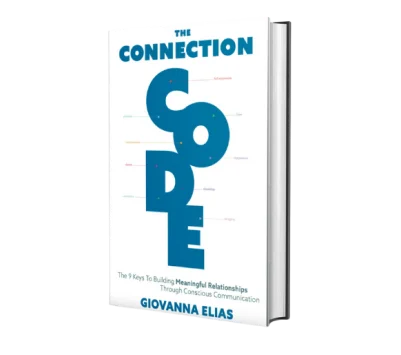
The principles behind The Connection Code™ are not reserved for a major relationship crisis or a high-stakes leadership meeting. Practice them in smaller moments. Tell a friend when a joke did not land well. Ask a coworker for clarification before frustration turns into a story. Tell your spouse what support would feel helpful after a hard day.
Each small act of honest, compassionate communication teaches your nervous system a new lesson: discomfort is survivable. You can speak with kindness and still be clear. You can hear someone else’s perspective without disappearing from your own.
The conversation you have been avoiding may not be easy. It may be emotional, imperfect, and unfinished by the end of the day. But when you enter it with clarity, compassion, and a commitment to your own truth, you create the possibility for something avoidance never can: a more honest connection with others and a deeper trust in yourself.





Pingback: How to Give Feedback Compassionately and Clearly – Giovanna Elias